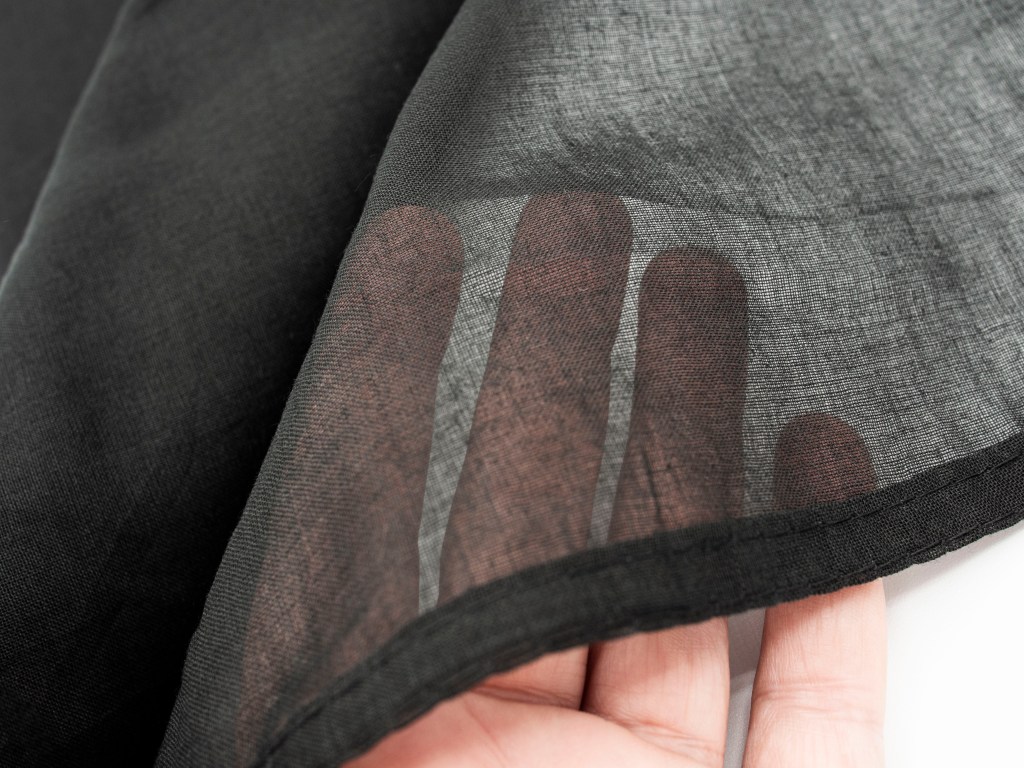
Why trying to be a perfectly sustainable consumer may be the wrong way to think about clothes
Polyester has real environmental costs. So do cotton, wool, linen and almost every other textile we use. This article is not a defence of plastic. It is an argument against treating individual consumers — and the fibres in their wardrobes — as the main environmental problem. Instead of asking whether a material is simply “good” or “bad”, we should also ask how a garment was made, how long it will last, whether it can be repaired, why it needs replacing and who benefits when we buy another one.
Let me begin with a confession: I smoke, I gossip and I wear polyester.
None of these belongs in the approved portrait of an ethical, environmentally conscious woman. Smoking is harmful. Gossip is supposedly unbecoming. Polyester is largely derived from fossil resources and can release plastic microfibres during manufacturing, use and washing.
I am not recommending any of them. I am saying that I am not pure.
Neither are you.
This should not be controversial. Yet contemporary sustainability culture often treats ordinary compromise as a personal moral failure. We are expected to avoid plastic, scrutinise every supply chain, buy locally, choose certified natural fibres, repair everything, create almost no waste and make the correct environmental decision every time we enter a shop.
We are expected to do this while working, raising families, paying rent and living inside an economy designed to make restraint difficult.
The result is not always greater responsibility. Often, it is guilt, exhaustion and another opportunity to sell us something.
When ethics becomes a consumer trend
Fashion has learnt how to sell almost every form of rebellion directed against it.
It has sold anti-fashion as fashion, imperfection as a luxury finish, workwear as leisurewear and poverty as an aesthetic. It has also learnt how to sell environmental conscience.
Sustainability is increasingly presented less as a political demand than as a shopping identity. The responsible consumer buys the organic T-shirt, the recycled trainer, the traceable handbag and the “conscious” collection. The act of purchasing remains unchanged; only its moral packaging is different.
The contradiction is obvious. We are told that excessive consumption is destroying the planet, then offered another purchase as proof that we care.
This is convenient for the industry. It leaves the machinery of overproduction largely untouched while transferring responsibility to the person standing in front of a clothing rail, trying to decide whether cotton, recycled polyester or a second-hand synthetic blend is the least damaging option.
The company that produces millions of unnecessary garments remains a business. The woman who buys one affordable polyester jumper becomes the environmental problem.
There is no innocent fibre
For years, I believed that plastic was the enemy.
Natural fibres belonged to the honest world of soil, craft and tradition. Cotton, linen and wool seemed morally legible. Polyester, acrylic and nylon represented oil, pollution and disposable fashion.
There is truth in this distinction. Synthetic fibres are tied to fossil-fuel extraction, persist in the environment and can shed microplastics throughout their lives.
But material reality is rarely as simple as a label.
Cotton requires land, water, labour and often chemical inputs. Wool requires animals, grazing land, processing and energy. Viscose begins with trees but passes through an industrial chemical system. Leather carries the consequences of livestock farming and tanning. Linen may have advantages in some circumstances, but it still has to be grown, processed, woven, dyed and transported.
Every fabric has a history of land, labour, water, extraction and power.
There is no completely innocent textile. There are only materials produced and used under different conditions, for different purposes and over different lengths of time.
Reducing this complexity to “natural good, synthetic bad” offers moral clarity, but not necessarily better judgement.
I work with natural fabrics. I still wear polyester
I have spent years handling, selling, dyeing and assessing textiles. I know the pleasure of linen that becomes softer with use, the irregularity of handwoven cotton and the way a well-made natural fabric changes rather than simply deteriorates.
I also know that a fibre label cannot tell me whether a garment is good.
I have seen cotton cloth so poorly woven that it loses its shape almost immediately. I have handled linen sold at a premium because the word itself now signals taste, even when the fabric is weak or badly finished. I have also seen synthetic garments that were practical and strong enough to remain in use for years.
Practical knowledge makes moral absolutes difficult to maintain.
Synthetic fibres can add strength, elasticity, weather resistance, quick drying and easier care. In sportswear, workwear and outerwear, these qualities may be necessary. A polyester coat worn for fifteen years cannot be evaluated in the same way as a polyester dress designed to survive one party and two photographs.
The fibre may be similar. The product, purpose and system of use are not.
This does not make polyester harmless. It means that fibre composition alone is not a complete ethical judgement.
A more serious assessment would ask:
• How well was the garment made?
• What purpose does it serve?
• How frequently will it be used?
• Can it survive repeated washing and repair?
• Was it designed to age, or simply to remain desirable until the next collection arrives?
• Who profits from its rapid replacement?
These questions are less convenient than reading a label, but they are closer to the truth.
Why durability matters
The fashion industry likes discussing innovation because innovation keeps the market moving. Durability is less glamorous because a durable product delays the next sale.
Yet the environmental value of clothing cannot be separated from time.
A garment that remains useful for ten or fifteen years occupies a different place in the material economy from one discarded after a season. This is true whether it is made from wool, cotton, nylon or polyester.
Durability is not only a property of the fibre. Companies decide whether seams are properly finished, whether fabric is tested for wear, whether buttons can be replaced and whether a garment can survive ordinary washing.
They also decide how quickly its appearance will be declared outdated.
A badly made natural-fibre garment does not become sustainable through vocabulary. A well-used synthetic garment does not become disposable merely because its composition is unfashionable.
The question is not only what a garment is made from. It is whether it was allowed to have a life.
Why recycling cannot solve overproduction
Recycling offers a reassuring ending to the story of consumption. We buy, use and eventually place the unwanted object in the correct container. Responsibility appears complete.
Textiles are not so easily redeemed.
A garment may contain several fibres, elastane, linings, coatings, threads, zips, dyes and chemical finishes. Separating these components can be difficult and expensive. Some recycling technologies are promising, but they do not operate at the scale required to absorb the volume of clothing now being produced.
Even an efficient recycling system would not justify limitless production. Recycling still requires collection, sorting, transport, energy and infrastructure.
A circular economy cannot mean producing enormous quantities of clothing and hoping technology will clean up the consequences.
Recycling belongs near the end of a garment’s useful life, not at the beginning of a marketing campaign.
The more important questions are why so much was produced, why it was made so poorly and why manufacturers are allowed to walk away from the waste they create.
Polyester did not create fast fashion
Plastic deserves criticism. But a material cannot make commercial decisions.
Polyester did not decide to release thousands of new styles each week. It did not suppress wages, pressure suppliers, destroy unsold stock or convince consumers that a functional coat had become embarrassing because its shoulders were cut differently this year.
Companies made those decisions.
The central problem is not that one fibre is evil. It is that the fashion economy depends on volume, speed, planned dissatisfaction and repeated replacement.
This system would not become sustainable if every polyester dress were replaced with cotton, linen or viscose. Infinite natural production would still require finite land, water, forests and labour.
Changing the material while preserving the commercial model is not transformation. It is product development.
The industry prefers debates about fibres because fibres are easier to change than power. A company can introduce a recycled collection without reducing its total output. It can replace plastic packaging while continuing to expand. It can publish a sustainability report without questioning the growth model on which its profits depend.
Material substitution may be useful. It should not be mistaken for structural reform.
Poverty is not a failure of taste
Much sustainable-fashion advice assumes that everyone has the same freedom to choose.
They do not.
A well-made natural-fibre coat may last twenty years. It may also cost more than someone can pay this winter. A parent may need clothing that is inexpensive, machine-washable and quick-drying. A cleaner, care worker or warehouse employee may need several practical garments that can withstand frequent washing. Someone working two jobs may not have the time or domestic conditions required to care for delicate wool, silk or linen.
A person buying a cheap polyester jumper may not be careless.
They may simply be cold.
Ethical consumer culture often treats access as virtue. Those who can afford traceable wool, independent tailoring and specialist cleaning appear disciplined and conscious. Those who rely on inexpensive synthetics appear irresponsible.
But virtue is easier when it is supported by income, time, housing and choice.
Cheap synthetic clothing has met real needs created by low wages and economic insecurity. Companies have exploited those needs, turning affordability into overproduction and low prices into an excuse for poor construction.
The responsibility of a multinational company producing millions of short-lived garments cannot be treated as equivalent to that of a low-income person buying one of them.
Individual choices matter. Power determines the conditions under which those choices are made.
Why the consumer became the ideal suspect
The moral language of sustainability concentrates heavily on the final and weakest participant in the supply chain: the buyer.
• Did she buy too much?
• Did she check the fibre content?
• Did she wash it too often?
• Did she repair it?
• Did she recycle it correctly?
These are not meaningless questions. But they become misleading when they replace larger ones.
• Why did the company produce so much?
• Why was the garment made so poorly?
• Why is the supply chain opaque?
• Why are repairs more expensive than replacement?
• Why can brands advertise environmental responsibility without disclosing how much they produce?
• Why are some of the world’s largest fortunes concentrated in fashion, luxury and cosmetics while garment workers remain among the least powerful people in the value chain?
• Why does an industry capable of producing immense family wealth repeatedly present its environmental failures as a problem of consumer discipline?
Guilt travels downwards more easily than responsibility travels upwards.
The consumer is told to buy less while billions are spent teaching her that repetition is failure. She is told to dispose responsibly of a garment that was never designed to be repaired or recycled.
The industry sells the anxiety that makes replacement feel necessary, then sells the moral cure for that anxiety.
Natural fibres can still be fast fashion
Cotton, linen and wool can all be made disposable.
A cotton T-shirt that twists after two washes is not responsible merely because it is natural. A linen dress bought for one holiday photograph has not fulfilled an environmental promise. A wool jumper produced through an opaque supply chain and discarded after a season remains part of the same culture of excess.
The meaning of a garment includes fibre, agriculture, labour, dyeing, construction, transport, marketing and duration of use.
It also includes desire.
Fashion does not survive by meeting existing needs alone. It manufactures new inadequacies: the wrong hem, the wrong colour, the wrong bag, the wrong body, the wrong decade.
This is why the most environmentally defensible garment is often not the one with the best label. It is the one already in your wardrobe.
It may be polyester. It may be acrylic. It may be a blend that current recycling systems cannot process.
Throwing it away to buy a newly manufactured “sustainable” replacement does not reverse the material history of either object.
Wear it. Care for it. Repair it when possible. Let it complete its life.
Ethical perfection is another product
Fashion has long imposed impossible standards on women’s bodies. It now increasingly imposes impossible standards on their shopping.
The ideal conscious consumer owns a compact wardrobe, buys certified fibres, avoids packaging, understands supply chains, repairs socks, supports local businesses and has enough money and time to make every decision correctly.
When she fails, she feels ashamed.
Shame is commercially useful. It prepares the customer for redemption.
The industry first sells excess, then sells minimalism. It sells plastic, then sells plastic-free living. It sells disposability, then sells the appearance of permanence. It turns criticism into a collection and conscience into a premium product category.
Personal responsibility matters. But responsibility without proportion becomes punishment.
You do not have to replace your wardrobe to prove that you care. You do not need to own only natural fibres to speak about pollution. You do not need to pass a purity test before demanding regulation, labour protections, production limits or corporate accountability.
An environmental politics that can be practised only by affluent consumers is not an adequate environmental politics.
Conscious choice is not perfect choice
The useful question is rarely whether a material is entirely good or entirely bad.
The better question is whether a particular choice makes sense in its actual context.
A durable natural fibre may be appropriate when it is responsibly produced and suited to its purpose. A synthetic or blended fibre may be reasonable when strength, elasticity, frequent washing or weather resistance matters. A second-hand garment may be preferable to either. Keeping an imperfect item for another five years may be better than replacing it tomorrow with a theoretically perfect one.
Real environmental decisions involve trade-offs.
One material may use less water but more fossil energy. Another may biodegrade but require more land. One garment may shed microfibres but withstand years of heavy use. Another may be natural, beautiful and completely unsuited to the life of the person expected to wear it.
No single fibre can solve a crisis produced by excessive volume, unequal wealth and a commercial need for endless replacement.
What I ask before I buy
I no longer promise myself that I will avoid every synthetic fibre.
I ask different questions.
• Do I need this?
• Will I use it frequently?
• Is it suitable for the job I expect it to do?
• Does the fabric have enough substance to survive?
• Are the seams properly made?
• Can it be repaired?
• Can I find it second-hand?
• Am I buying it because my current garment has failed, or because fashion has made it feel obsolete?
• Who benefits from my dissatisfaction?
I still choose natural fibres often. I value their comfort, texture and ability to age. I work with them because I know what they can become in skilled hands.
But I no longer confuse naturalness with innocence.
Nor do I confuse synthetic material with personal failure.
Nobody is pure
I smoke. I gossip. I wear polyester.
I also keep clothes for years. I repair what I can. I work with natural textiles. I understand enough about cloth to know that every material carries consequences. I think carefully about what I buy, and sometimes I buy something that contradicts what I believe.
That is not unusual. It is life inside a system none of us controls completely.
Most people make decisions under pressure from income, work, health, family and geography. Our behaviour will not always express our values perfectly.
That does not make the values meaningless.
It means perfection was never a serious political programme.
Environmental responsibility should make us more observant, not more obedient to shame. It should direct attention towards industrial production, concentrated wealth, corporate power and the systems that create waste at a scale no household can approach.
Buy less when you can.
Use what you own for longer.
Choose quality within the limits of your budget.
Learn about materials without turning them into moral identities.
Support better labour conditions, producer responsibility, effective regulation, repair infrastructure and genuine reductions in production.
And when you fall short of your ideals, do not allow guilt to distract you from the institutions with far greater power to change the system.
Wear the polyester coat you already own until it can no longer be worn.
Then ask why the industry produced a thousand replacements before you needed even one.
 MAZDISA
Leave a comment